Table of Contents
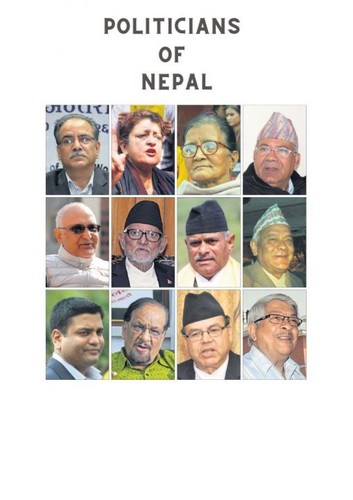
Nepal’s political landscape has seen ongoing turmoil, from the dissolution of parliament quashed by the Supreme Court to persistent political unrest. In the midst of this chaos, I was curious to understand how Nepal reached this state. My journey began with an attempt to learn more about the country’s politicians by exploring the official website of the Prime Minister of Nepal. Unfortunately, the website provided little information. Determined to dig deeper, I explored various government websites but still found no comprehensive data about Nepalese politicians.
Finally, I stumbled upon a Wikipedia page that listed notable politicians in Nepal. It wasn’t perfect, but it offered a starting point. By scraping data from this page, I was able to compile a dataset of Nepalese politicians’ ages.
Key Findings from the Dataset

Despite its limitations, the dataset reveals some important insights:
- Dominance of Older Age Group : The majority of politicians fall within the age range of 60 to 80 years, highlighting the prevalence of senior citizens in Nepal’s political landscape.
- Average Age : The average age of the politicians in the dataset is approximately 63 years, classifying most of them as senior citizens under Nepal’s Senior Citizen Act (60+ years).
- Lack of Youth Representation : Politicians aged below 40 years are extremely rare. Only two politicians in the dataset are under the age of 45, with the youngest being just 24 years old.
- Significant Age Gap : The gap between the youngest politician (24 years) and the oldest politician (92 years) is a striking 68 years, indicating a lack of generational diversity in Nepalese politics.
Interestingly, Nepal’s Senior Citizen Act (2006) defines a senior citizen as anyone aged 60 or older. This means that the average age of Nepalese politicians falls squarely into the senior citizen category, confirming that Nepal operates as a gerontocracy—rule by the elderly.
Nepal vs. Global Trends
The Global Parliamentary Report by UNDP offers the following benchmarks:
- → The global average age of Members of Parliament (MPs) is 53.
- → The average age of women MPs is 50.
- → Sub-Saharan African MPs have the youngest average at 49, while Arab countries have the oldest average at 55.
Nepal’s average political age of 63 exceeds the global norm, making it one of the oldest among nations. This disparity highlights significant barriers for younger generations to enter politics.
Barriers to Youth Participation
The dataset underscores the difficulty Nepali youth face in pursuing political careers. The political system is heavily skewed toward older generations, who dominate decision-making roles. For a more dynamic and inclusive political environment, the older generation must mentor and empower their successors, ensuring a smooth generational transition.
The sample data is presented below. For the complete source code please visit Github . You can get the raw data here .
Last scraped : 22/11/2021
| Name | Date of Birth | Age |
|---|---|---|
| Dilendra Prasad Badu | 1954-01-09 | 66 |
| Khadgajeet Baral | 1928-04-17 | 92 |
| Dev Raj Bhar | 1952-01-29 | 68 |
| Lekh Raj Bhatta | 1960-03-24 | 60 |
| Ranju Darshana | 1996-03-03 | 24 |
| Arzu Rana Deuba | 1962-01-26 | 58 |
| Sher Bahadur Deuba | 1946-09-12 | 74 |
| Bam Dev Gautam | 1948-07-09 | 72 |
| Kul Bahadur Gurung | 1935-11-23 | 84 |
| Tek Bahadur Gurung | 1954-11-26 | 65 |
| Ram Karki | 1956-10-16 | 64 |
| Sushila Karki | 1952-06-07 | 68 |
| Narayan Khadka | 1949-03-20 | 71 |
| Jhala Nath Khanal | 1950-05-20 | 70 |
| Shekhar Koirala | 1950-08-25 | 70 |
| Krishna Bahadur Mahara | 1958-06-29 | 62 |
| Chandra Maharjan | 1954-11-16 | 65 |
| Ram Saran Mahat | 1951-01-01 | 69 |
| Rajendra Mahato | 1958-11-19 | 61 |
| Radha Krishna Mainali | 1946-09-26 | 74 |
| Salma Khatoon Mikrani | 1976-01-25 | 44 |
| Madhav Kumar Nepal | 1953-03-06 | 67 |
| KP Sharma Oli | 1952-02-22 | 68 |
| Bal Chandra Poudel | 1959-06-22 | 61 |
| Binda Pandey | 1966-12-30 | 53 |
| Surendra Pandey | 1958-08-25 | 62 |
| Tilak Pariyar | 1943-10-31 | 76 |
| Ananta Prasad Paudel | 1962-07-28 | 58 |
| Bishnu Prasad Paudel | 1959-11-20 | 60 |
| Shankar Pokharel | 1963-02-27 | 57 |
| Sher Dhan Rai | 1971-02-23 | 49 |
| Prakash Man Singh | 1956-04-03 | 64 |
| Dal Bahadur Sunar | 1959-10-01 | 61 |
| Surya Man Dong Tamang | 1970-04-20 | 50 |
| Gagan Thapa | 1976-07-16 | 44 |
| Hridayesh Tripathi | 1959-06-18 | 61 |
| Amod Prasad Upadhyay | 1936-03-29 | 84 |
| Ram Baran Yadav | 1948-02-04 | 72 |
| Upendra Yadav | 1960-12-11 | 59 |
Conclusion
The data reveals that Nepal’s political system is overwhelmingly dominated by senior citizens, significantly surpassing global age averages for politicians. While experience and wisdom are essential in leadership, it is equally important to encourage youth participation to bring fresh perspectives and ensure long-term political stability. The old guard must take proactive steps to mentor and pave the way for the next generation of leaders.
Nepal’s path to a more inclusive and dynamic political system lies in its ability to balance tradition with innovation—bridging the generational gap in governance.
Visit the Project on GitHub